One of the biggest challenges in sustainability management is collating information that already exists across the business.
Sustainability teams work with data spread across finance systems, procurement platforms, supplier networks, operational systems, and reporting tools, making it difficult to build a complete picture of sustainability performance. When sustainability data is disconnected from broader business information, reporting becomes more difficult, and opportunities for operational improvement can be harder to identify.
Agentforce Net Zero (formerly Net Zero Cloud) is Salesforce’s answer to this challenge. Built on the Salesforce platform, it combines sustainability management, carbon accounting, reporting, AI-powered analysis, and operational data within a single ecosystem.
But is it the right platform for you? This guide explores how Agentforce Net Zero is positioned and how alternative platforms, such as Sweep, compare in sustainability management, enterprise data integration, and business decision-making.
What is Agentforce Net Zero and how does it work?
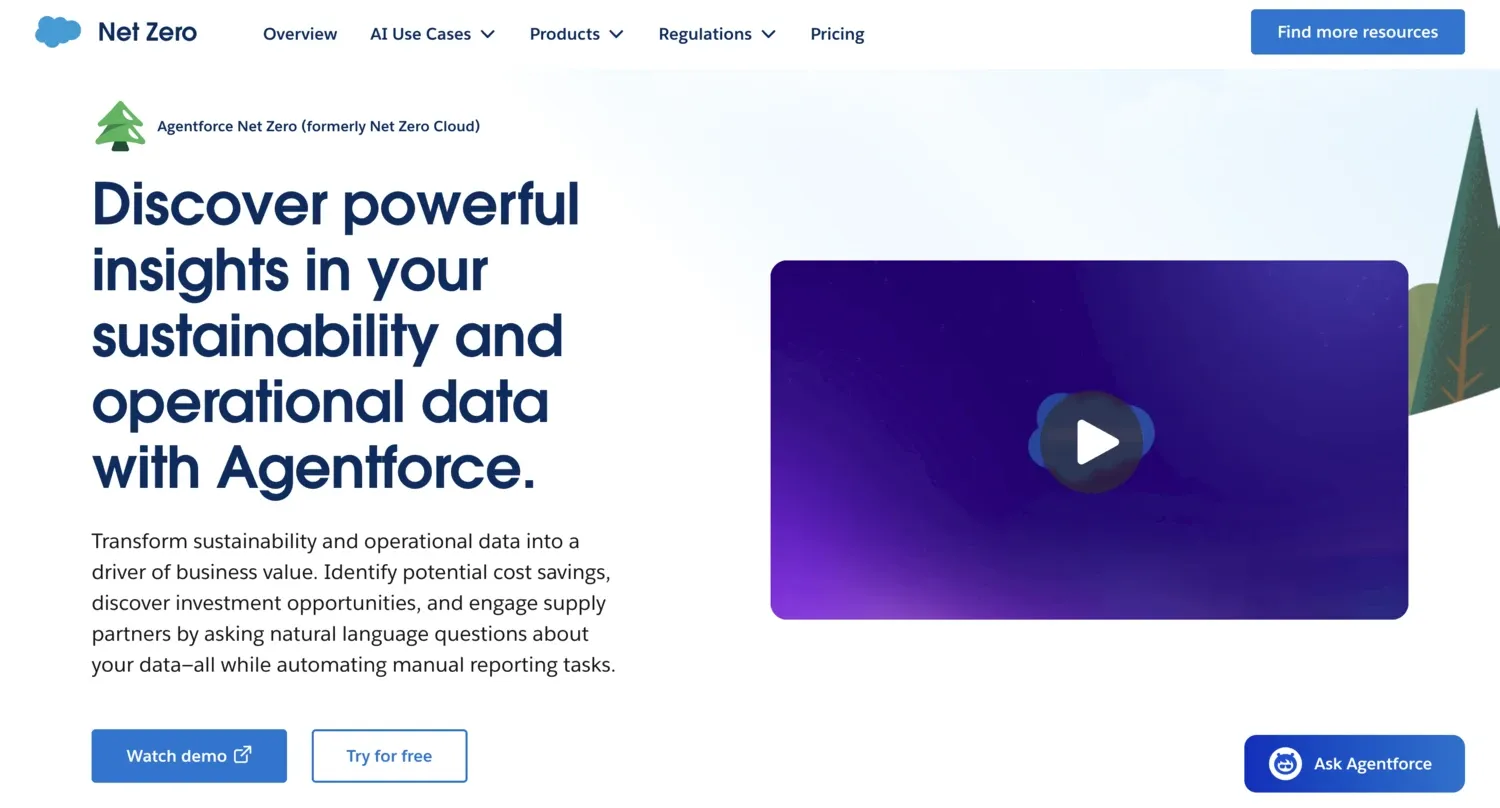
Agentforce Net Zero is Salesforce’s sustainability management platform. Built on the Salesforce ecosystem, it combines carbon accounting, ESG reporting, operational analytics, and workflow automation to help organizations manage sustainability performance at scale.
Net Zero Cloud AI plays an increasingly important role within the platform, helping teams generate framework-aligned reports, analyze sustainability performance, identify operational opportunities, and interact with complex datasets using natural language. These capabilities reduce manual reporting effort while making sustainability information more accessible across the business.
The platform supports teams by:
- Tracking and managing Scope 1, 2, and 3 emissions across global operations
- Centralizing sustainability and operational data within a single system
- Supporting ESG disclosures across frameworks such as CSRD, GRI, and other reporting requirements
- Automating report creation and disclosure workflows through Net Zero Cloud AI
- Identifying operational risks, cost-saving opportunities, and sustainability performance trends
- Managing supplier, subsidiary, and value chain sustainability data across the organization
This approach helps organizations connect sustainability data with operational performance, business planning, and decision-making across the enterprise.
Why might organizations consider alternative approaches?
As sustainability requirements expand, organizations may need deeper carbon accounting capabilities, stronger supplier engagement workflows, broader sustainability management functionality, or greater flexibility across reporting and compliance requirements.
This often leads teams to evaluate platforms designed specifically for sustainability management and sustainability intelligence.
Sustainability requirements extend beyond the Salesforce ecosystem
Many organizations benefit from having sustainability data connected to existing business systems. Others may prioritize sustainability-specific functionality that can operate independently of broader CRM and enterprise software environments.
Carbon accounting becomes more complex
As reporting requirements expand, organizations may require deeper capabilities for Scope 1, 2, and 3 emissions measurement, supplier engagement, financed emissions, and decarbonization planning.
Sustainability reporting requirements increase
Organizations often need to manage disclosures across multiple frameworks while maintaining data quality, auditability, and consistency across reporting processes.
Supplier and value chain engagement become priorities
Managing supplier emissions, collecting primary data, and supporting decarbonization initiatives across the value chain can require more specialized sustainability workflows.
Sustainability data supports a wider range of decisions
As sustainability data and reporting becomes embedded in operational planning, procurement, investment decisions, and risk management, organizations may look for platforms specifically designed for sustainability intelligence and performance management.
5 Alternatives to Agentforce Net Zero
Sweep
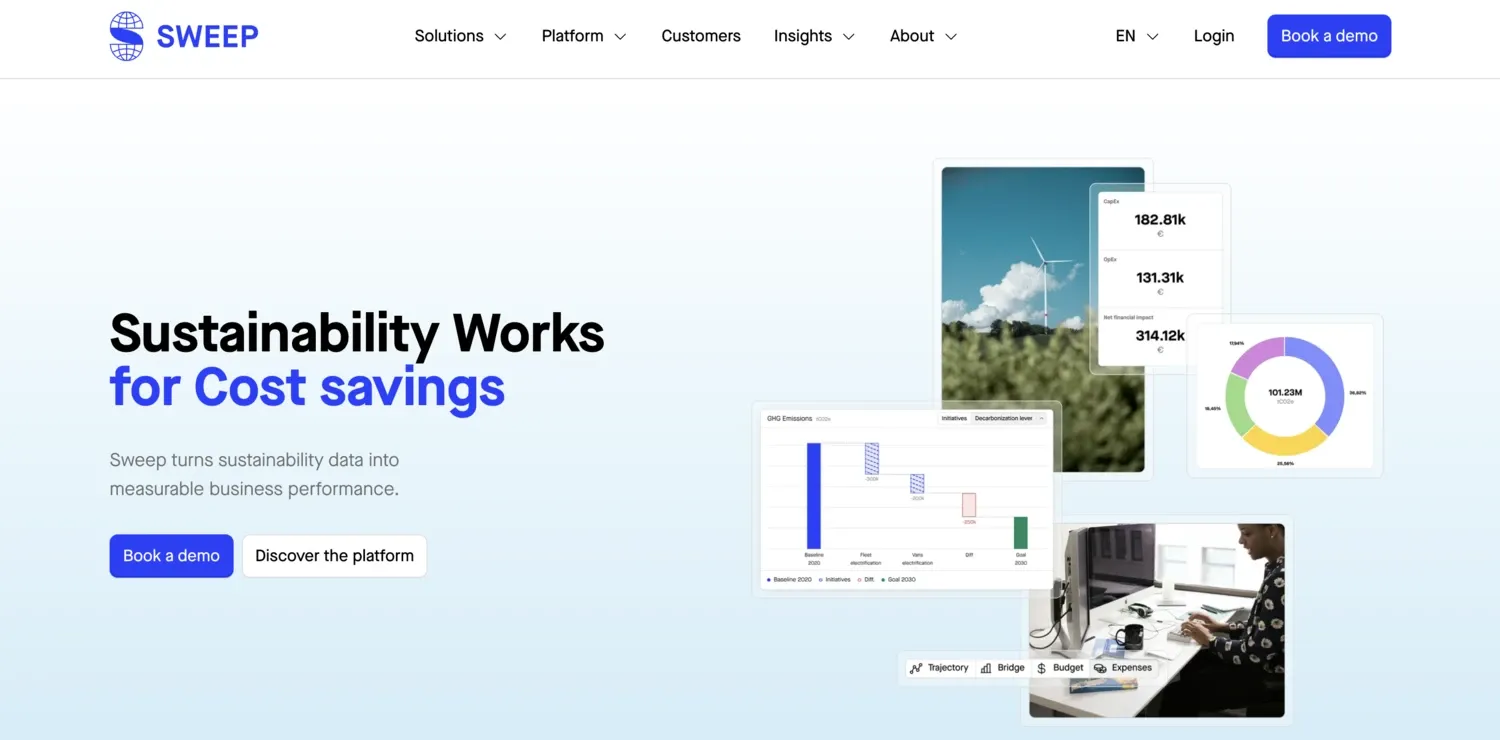
Sweep is a sustainability intelligence platform that helps organizations manage carbon accounting, ESG reporting, sustainability data, and operational sustainability workflows within a single system. The platform is designed to connect sustainability information with business decision-making, helping organizations move from data collection and reporting to performance management and action.
Like Agentforce Net Zero, Sweep brings sustainability data into a centralized environment that can be used across reporting, operations, procurement, finance, and sustainability teams. The platform combines carbon accounting, reporting, supplier engagement, and sustainability management capabilities, and provides tools to identify risks, prioritize initiatives, and track progress over time.
Best suited for
Organizations that are looking to connect sustainability reporting, carbon accounting, supplier engagement, and operational sustainability management within a single platform.
Key features
- Carbon and ESG data management across multiple entities, business units, and reporting frameworks
- Scope 1, 2, and 3 emissions management with supplier engagement and value chain visibility
- Multi-framework reporting across CSRD, ISSB, GRI, TCFD, CDP, and other requirements
- AI-powered sustainability workflows, data validation, and reporting support
- Sustainability performance tracking, target management, and operational insights
Considerations
- Designed as a dedicated sustainability platform rather than part of a broader CRM or ERP ecosystem
- Cross-functional capabilities are most valuable when sustainability ownership extends beyond reporting teams
- Organizations heavily invested in existing enterprise software ecosystems may evaluate integration requirements alongside platform capabilities
SAP Sustainability Solutions
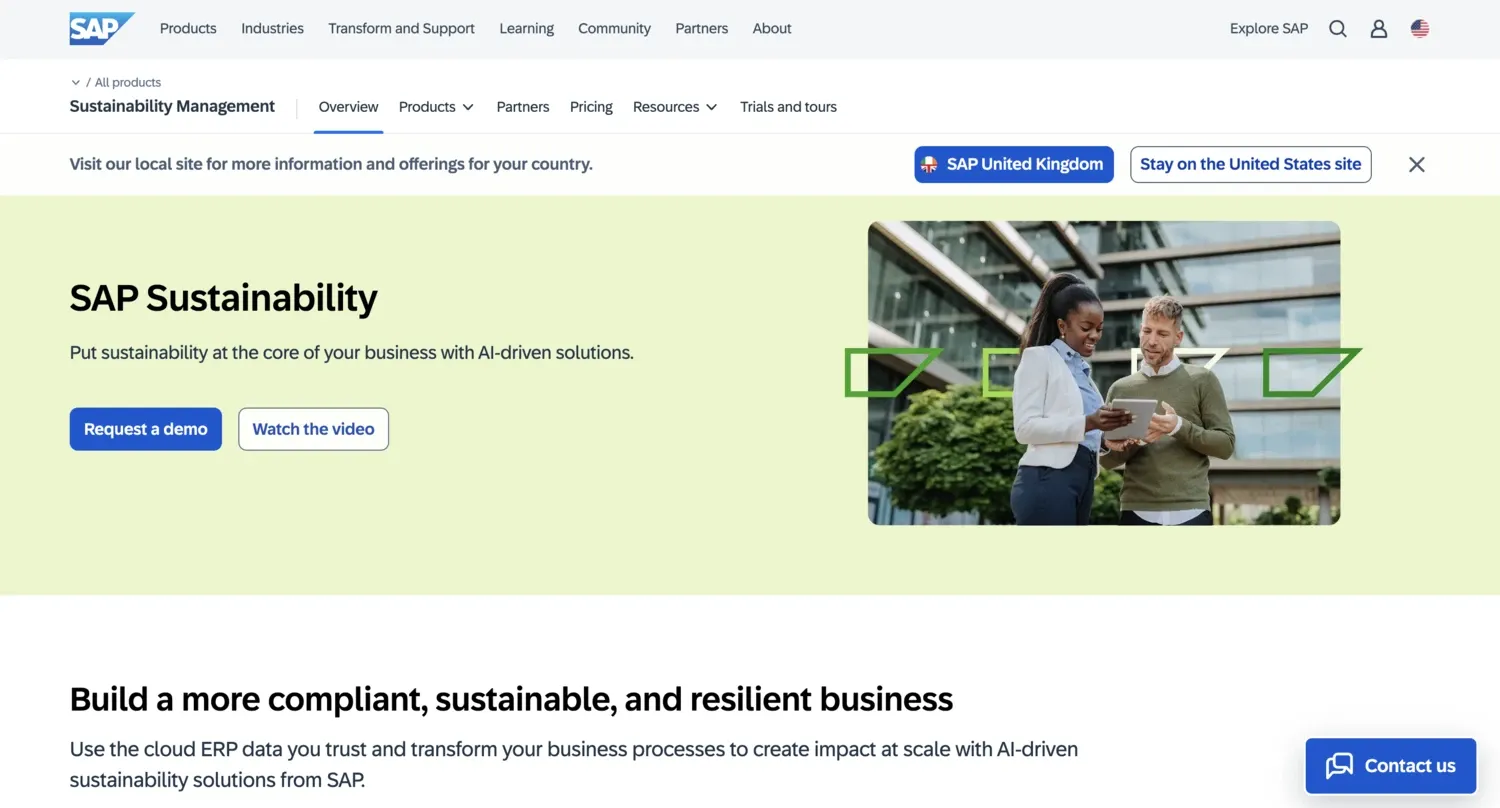
SAP Sustainability is a suite of sustainability management solutions designed to embed sustainability directly into business operations, finance processes, supply chains, and enterprise reporting. Built on SAP’s ERP ecosystem, the platform combines ESG reporting, carbon accounting, supply chain sustainability, compliance management, and operational sustainability within a connected business environment.
Like Agentforce Net Zero, SAP positions sustainability as a business-wide capability rather than a standalone reporting function.
Best suited for
Large organizations looking to integrate sustainability management, carbon accounting, and ESG reporting into existing ERP and operational processes.
Key features
- ESG reporting and sustainability data management through SAP Sustainability Control Tower
- Carbon accounting and value chain emissions management with SAP Sustainability Footprint Management
- Supply chain sustainability, due diligence, and product compliance capabilities
- AI-powered sustainability insights and operational analytics
- Sustainability data integrated with ERP, finance, procurement, and supply chain processes
Considerations
- Delivers the most value for organizations already operating within the SAP ecosystem
- Broad functionality can require significant implementation and cross-functional coordination
- The portfolio spans multiple sustainability products, which may increase complexity for organizations seeking a more focused sustainability platform
IBM Envizi
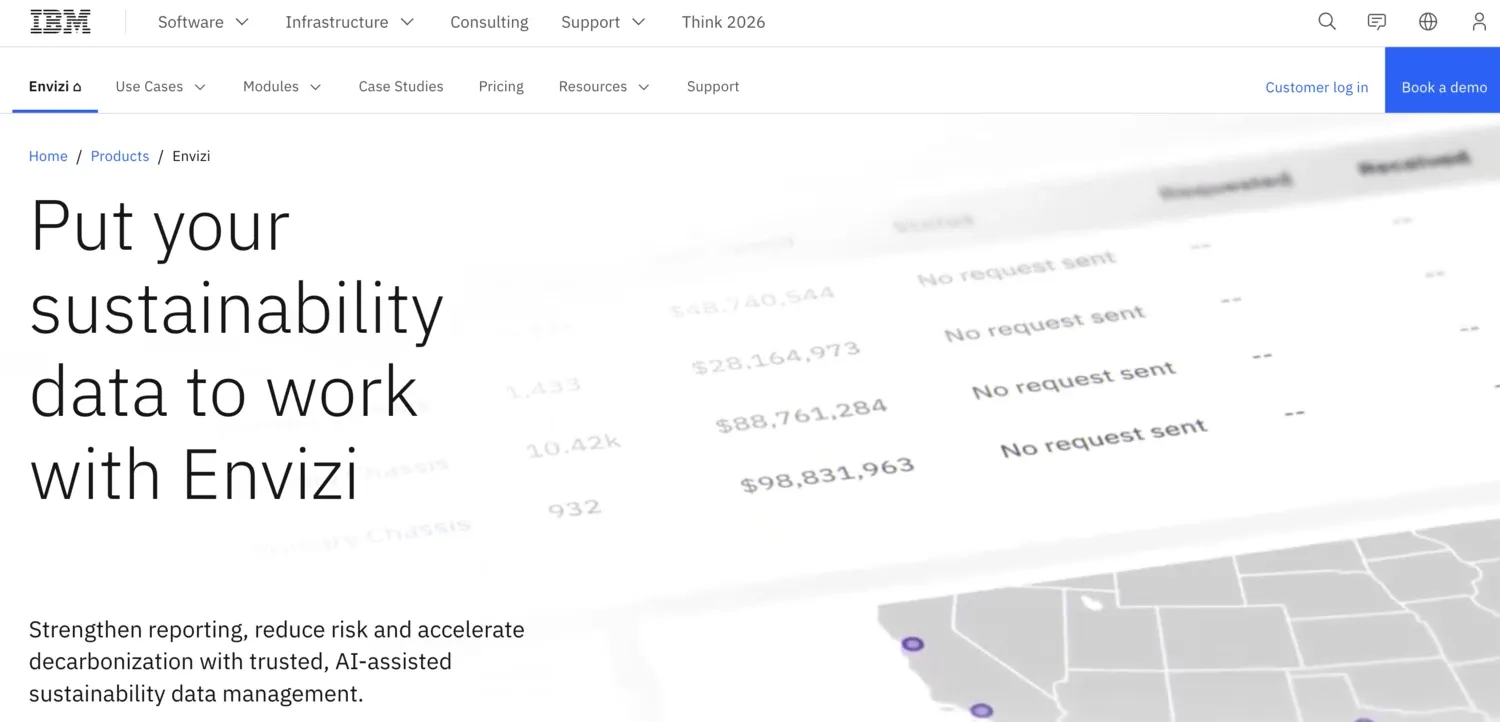
IBM Envizi is an enterprise sustainability data and reporting platform designed to help organizations collect, manage, analyze, and report ESG and emissions data at scale. The platform combines ESG data management, carbon accounting, reporting, climate risk analysis, and decarbonization planning within a centralized system built to support complex enterprise reporting requirements.
Compared with Agentforce Net Zero, which emphasizes connecting sustainability and operational data across the Salesforce ecosystem, Envizi places greater focus on building a trusted, auditable ESG data foundation that supports reporting, emissions management, and sustainability performance tracking.
Best suited for
Organizations managing large volumes of ESG and emissions data across multiple entities, reporting frameworks, and business systems.
Key features
- Enterprise ESG data management and automated data ingestion
- Scope 1, 2, and 3 emissions accounting and reporting
- Financed emissions and supply chain intelligence capabilities
- ESG reporting across multiple frameworks and disclosure requirements
- Decarbonization planning, forecasting, and sustainability program tracking
- Climate risk analysis and sustainability performance analytics
Considerations
- Primarily focused on ESG data management, reporting, and emissions management rather than broader business process integration
- Enterprise-grade functionality may exceed the requirements of smaller sustainability programs
- Organizations seeking sustainability capabilities tightly embedded within CRM or ERP workflows may prefer ecosystem-native platforms
Workiva
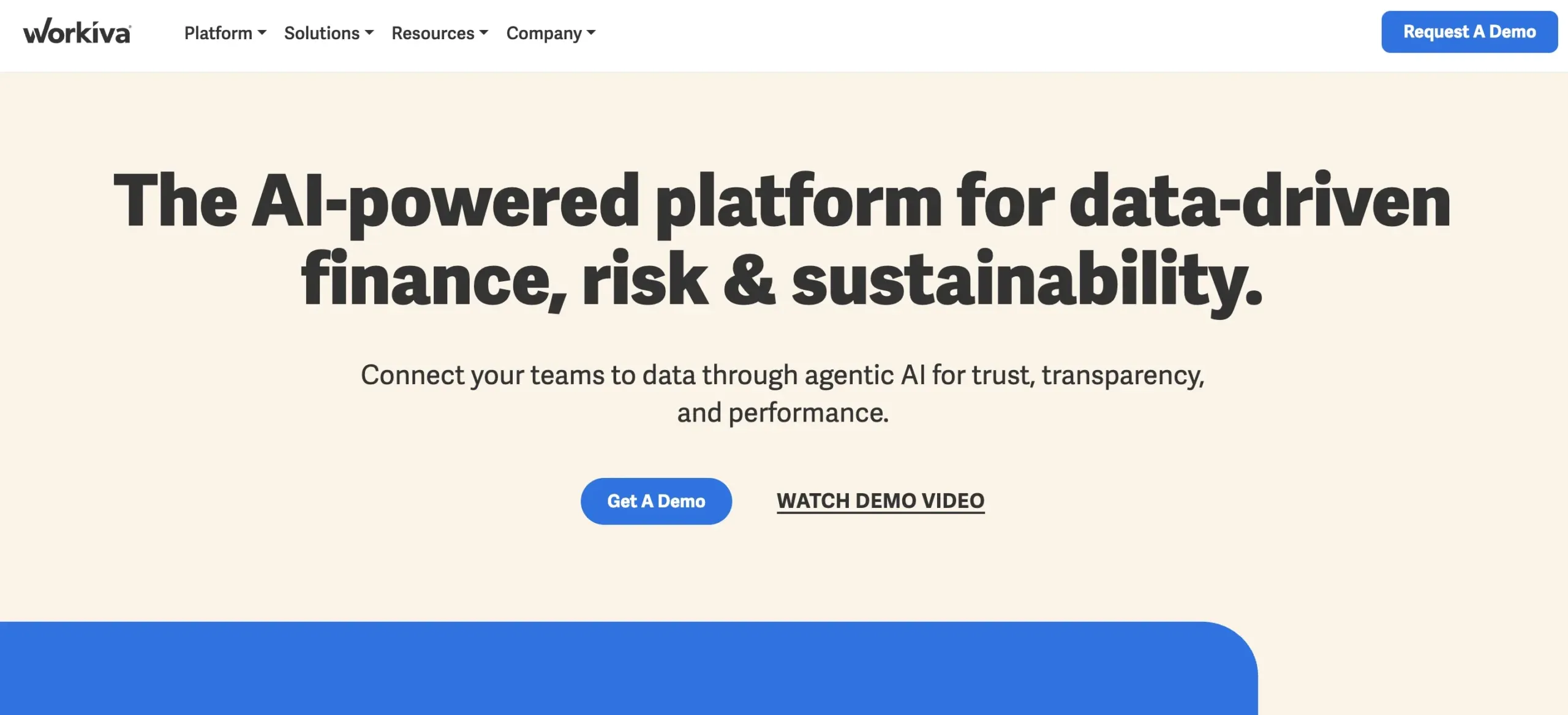
Workiva is a reporting and governance platform that helps organizations manage sustainability disclosures, financial reporting, risk management, and regulatory compliance within a connected reporting environment.
While Agentforce Net Zero focuses on connecting sustainability and operational data to support business decision-making, Workiva is centered on helping organizations manage the reporting process itself. This includes collecting information from multiple sources, maintaining governance controls, and producing consistent disclosures across sustainability and financial reporting requirements.
Best suited for
Organizations prioritizing ESG reporting, disclosure management, governance, and audit-ready reporting processes.
Key features
- ESG reporting aligned with frameworks such as CSRD, ISSB, SASB, GRI, and SEC requirements
- Connected sustainability, financial, and regulatory reporting workflows
- Governance controls, audit trails, and version management
- Collaboration tools for sustainability, finance, risk, and compliance teams
- AI-assisted reporting and disclosure workflows
Considerations
- Primarily focused on reporting, governance, and disclosure management rather than operational sustainability management
- Carbon accounting capabilities may require integrations or supporting systems
- Organizations looking to connect sustainability data directly with operational performance and business processes may require additional tools alongside reporting workflows
Watershed
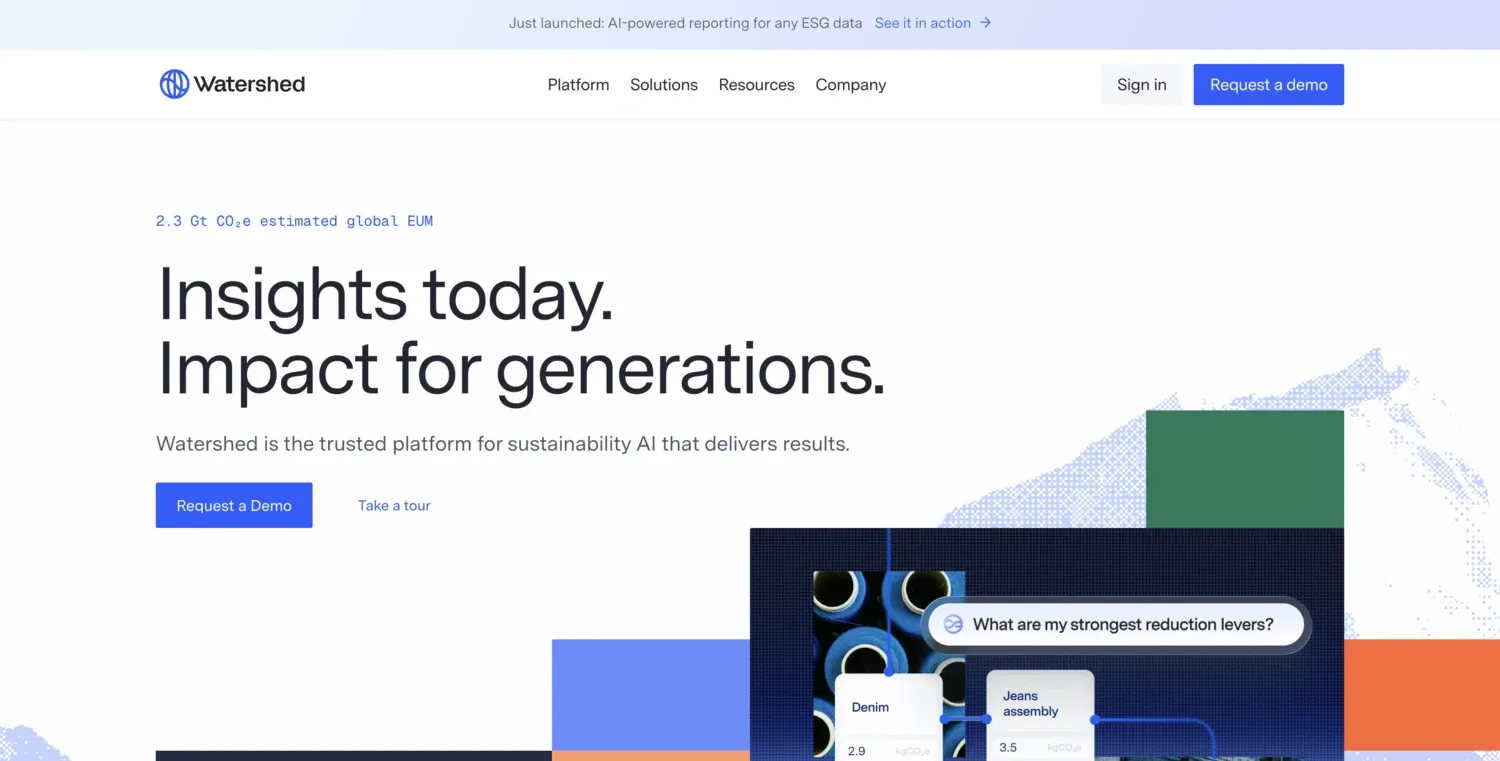
Watershed is a sustainability platform focused on carbon management, climate intelligence, and enterprise decarbonization. The platform helps organizations measure emissions, understand the drivers behind their carbon footprint, engage suppliers, and identify opportunities to reduce emissions across operations and value chains.
Compared with Agentforce Net Zero, which emphasizes bringing sustainability and operational data together within a broader business ecosystem, Watershed is more heavily focused on helping organizations turn emissions data into climate action.
Best suited for
Organizations focused on carbon management, climate strategy, and enterprise decarbonization initiatives.
Key features
- Scope 1, 2, and 3 emissions accounting and reporting
- Supplier engagement and value chain emissions management
- Emissions hotspot analysis and reduction planning
- Climate reporting and sustainability disclosure support
- Decarbonization forecasting and target tracking
Considerations
- Climate and carbon management remain the primary platform focus
- Broader ESG governance and enterprise reporting capabilities may require additional tools, depending on requirements
- Organizations seeking sustainability data deeply integrated into existing CRM, ERP, or operational systems may prefer ecosystem-based platforms
Agentforce Net Zero vs Sweep at a high level
| Area | Sweep | Agentforce Net Zero |
| Primary focus | Sustainability data, carbon management, reporting, and operational sustainability workflows | Connecting sustainability and operational data across the business |
| Scope | Carbon accounting, ESG data, reporting, supplier engagement, and sustainability management | Sustainability metrics, operational data, reporting, and business insights |
| Data model | Sustainability-first platform designed around ESG and carbon management | Sustainability layered onto CRM, operational, and enterprise data |
| AI capabilities | Sustainability workflow automation, data validation, reporting support, and supplier engagement workflows | Agentforce AI for reporting automation, data analysis, and natural language interaction |
| Supplier engagement | Scope 3 data collection, supplier collaboration, and value chain emissions management | Supplier, subsidiary, and value chain data management within the Salesforce ecosystem |
| Reporting | Multi-framework reporting across CSRD, ISSB, GRI, CDP, TCFD, and other requirements | Framework-aligned reporting supported by Agentforce automation and disclosure tools |
| Best suited for | Organizations looking for a dedicated sustainability management platform | Organizations that are already invested in Salesforce and want sustainability embedded into broader business processes |
How to choose the right platform
Choosing the right platform depends on whether your primary goal is sustainability reporting, carbon management, operational integration, or enterprise-wide sustainability management.
- If your priority is connecting sustainability data with CRM, operational, and business processes, platforms such as Agentforce Net Zero or SAP Sustainability may be a strong fit
- If ESG data management, emissions reporting, and decarbonization planning are central requirements, platforms such as IBM Envizi can provide deeper sustainability analytics and reporting capabilities
- If governance, auditability, and regulatory disclosures are the primary focus, reporting platforms such as Workiva may be better aligned with reporting and compliance teams
- If climate strategy, supplier engagement, and emissions reduction planning are the main objectives, platforms such as Watershed offer dedicated carbon management capabilities
- If organizations are looking to connect carbon accounting, sustainability reporting, supplier engagement, and operational sustainability workflows within a dedicated sustainability platform, broader sustainability management solutions may provide greater flexibility
From sustainability data to sustainability intelligence
Centralizing sustainability data is an important first step. As sustainability programs mature, organizations increasingly need systems that help them understand performance, identify opportunities, manage reporting requirements, and coordinate action across multiple teams.
Platforms such as Agentforce Net Zero help organizations bring sustainability and operational data into a unified system, creating greater visibility across business processes and supporting more informed decision-making.
Many organizations are also looking to go further by connecting sustainability data with carbon accounting, supplier engagement, reporting, target tracking, and sustainability performance management within a dedicated sustainability environment.
Sweep is a sustainability intelligence platform that supports this broader approach. Book a demo to see how Sweep helps organizations turn sustainability data into measurable business performance.