ESG reporting software is evolving quickly, and platforms are taking different approaches to data management, compliance, and reporting.
The solutions below highlight how the market is shaping up and where different tools fit depending on your requirements.
1. Workiva
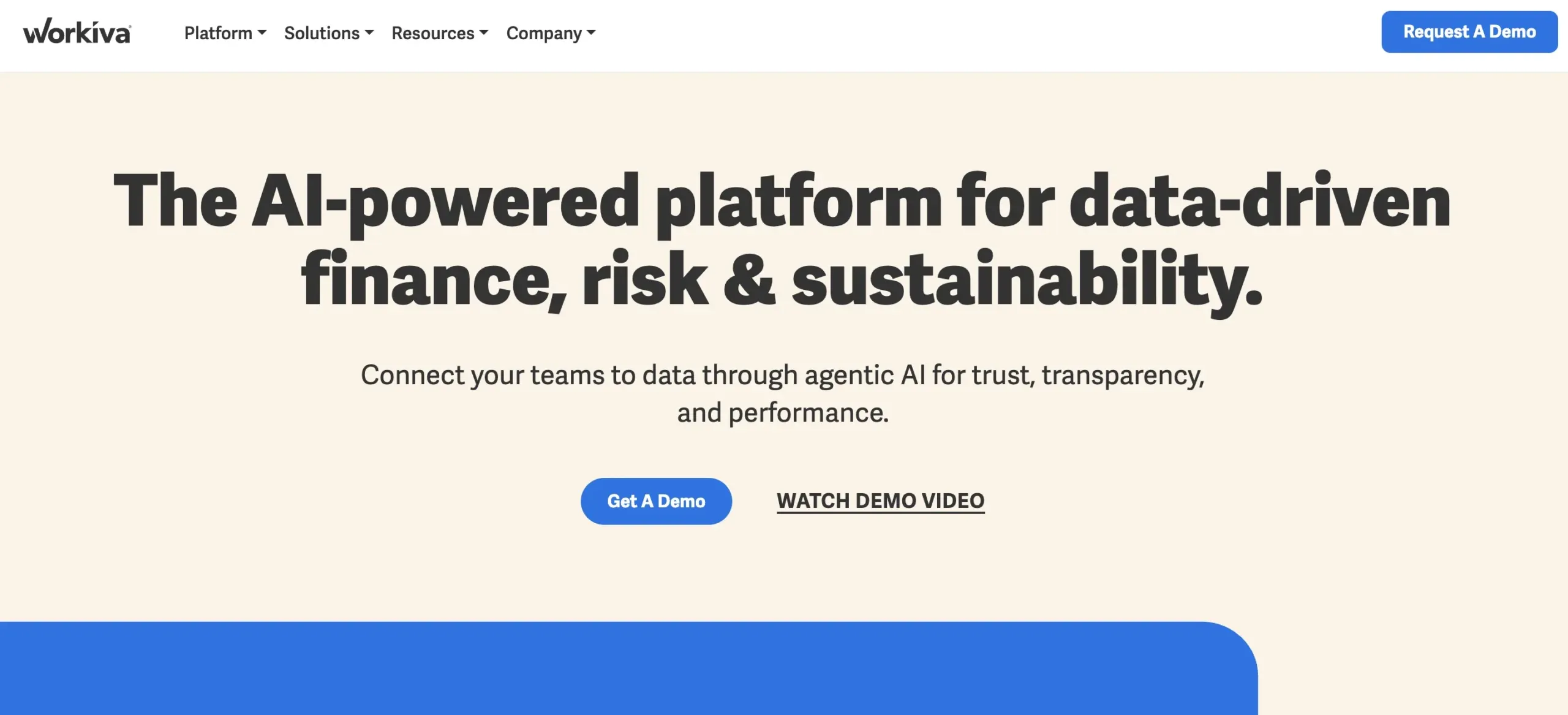
Workiva is a cloud-based platform designed to support comprehensive ESG data management. It provides tools for collaboration and audit trails, helping mitigate risks and improve productivity.
Key features: Workiva supports various types of reports, including financial and ESG disclosures, with pre-built frameworks and standards. It is particularly valuable for finance, accounting, and sustainability professionals needing efficient reporting solutions.
Top clients: Tom Tom, Asics, Oatly, Telefonica.
2. Greenly
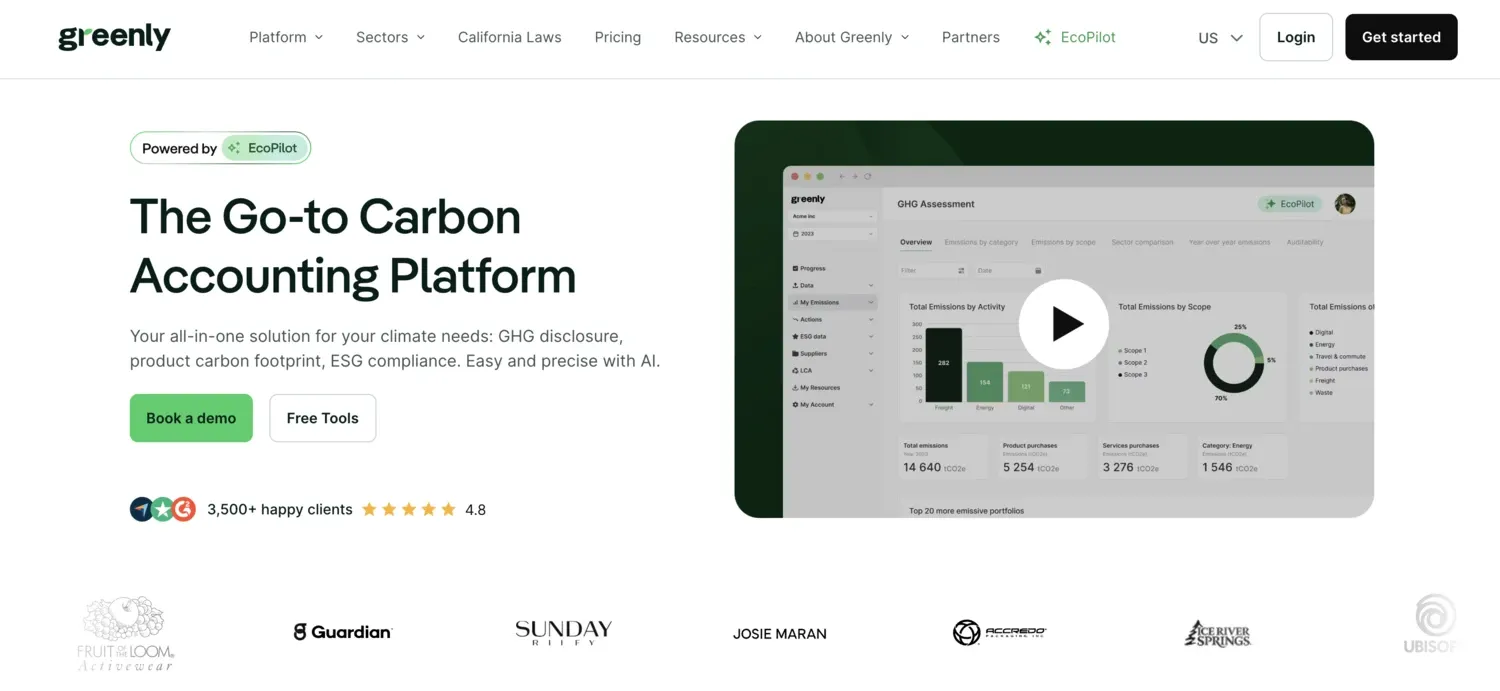
Greenly is a centralized ESG performance platform that helps businesses measure and reduce their CO2 emissions. It features tools for real-time monitoring, setting reduction targets, and simplifying ESG reporting capabilities.
Key features: Greenly integrates physical and monetary flows to deliver audit-ready data, monitors greenhouse gas emissions in real time, and offers personalized dashboards. It also facilitates team collaboration in the decarbonization journey.
Top clients: Axa, Tripadvisor, Givenchy, Pernod Ricard.
3. Sweep
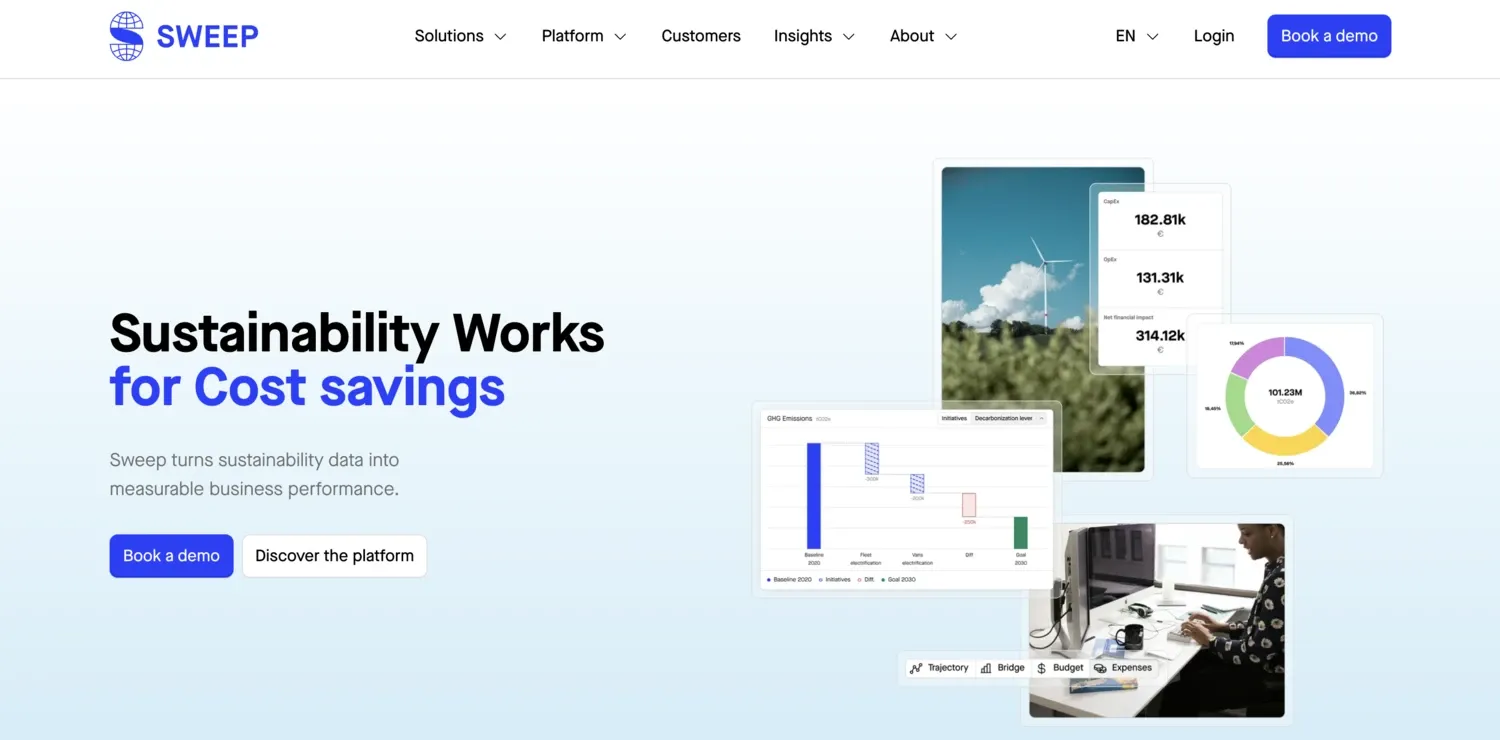
Sweep is a leading platform that leverages AI to streamline the collection, management, and reporting of sustainability data for businesses and financial institutions of all sizes. It simplifies processes for compliance with major ESG frameworks and enhances transparency in ESG practices.
Sweep’s position as a world-leading sustainability data management software has been further cemented in the latest IDC MarketScape report, which highlights its flexibility, robust data management, secure data ingestion, and capabilities in goal-setting and monitoring, as well as supplier engagement.
Key features: Sweep offers simplified data collection and reporting tools, customizable surveys for accuracy, and tools to track emissions and supply chain compliance. It provides a clear overview of progress towards targets and ensures adherence to frameworks such as the CSRD and SFDR.
Top clients: L’Oreal, Mano Mano, SNCF, Swisscom, Qwetch, SSE, Lacoste.
4. Persefoni
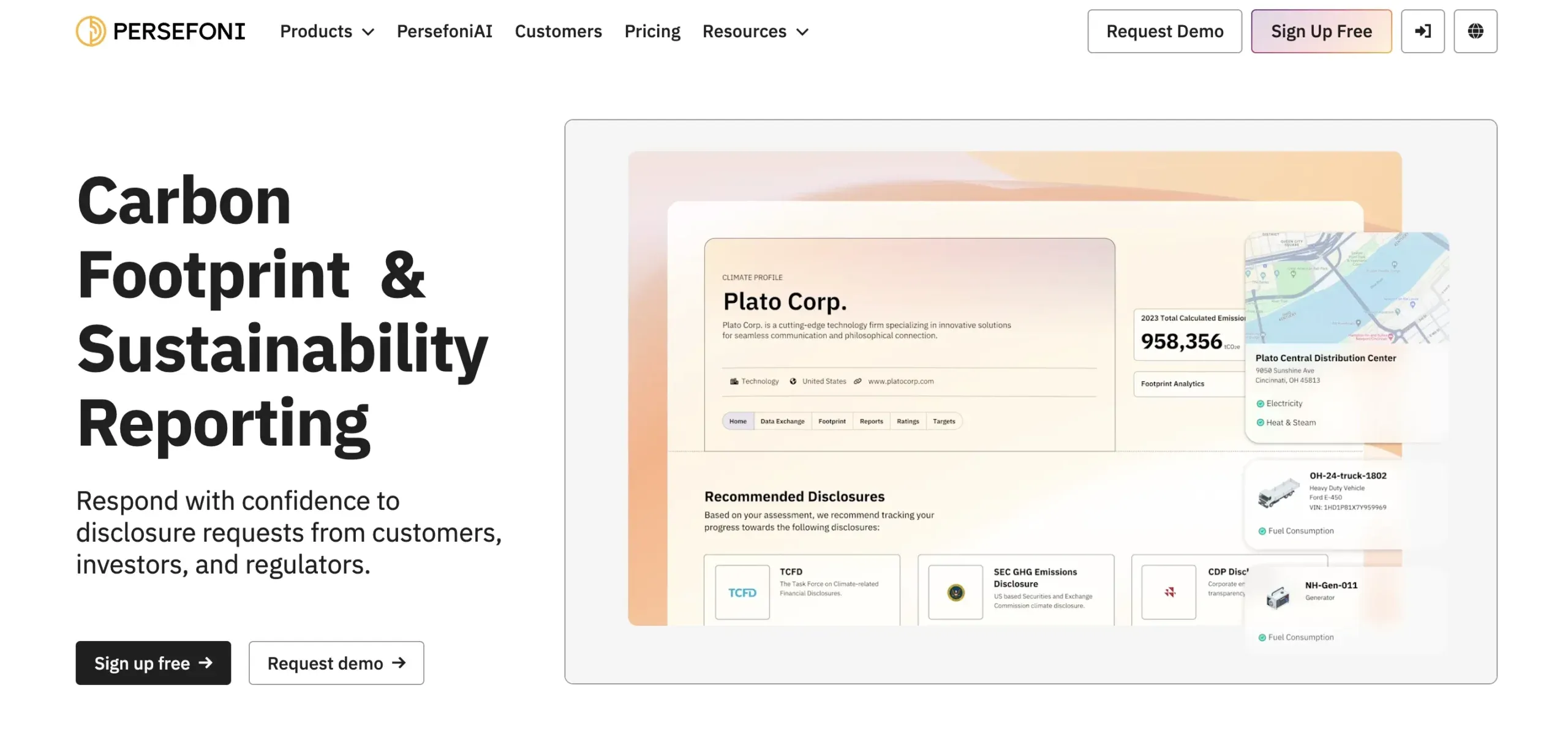
Persefoni utilizes AI to provide a comprehensive solution for carbon management and ESG reporting. It assists businesses in measuring their carbon footprint, developing an ESG strategy, and complying with emissions reporting standards.
Key features: Persefoni offers AI-powered carbon management, regulatory and investor emissions reporting, and comprehensive Scope 3 supplier engagement. Its platform supports the development of decarbonization strategies and comprehensive emissions tracking.
Top clients: The New York Times, Xerox, Snowflake, FAIRE.
5. Watershed
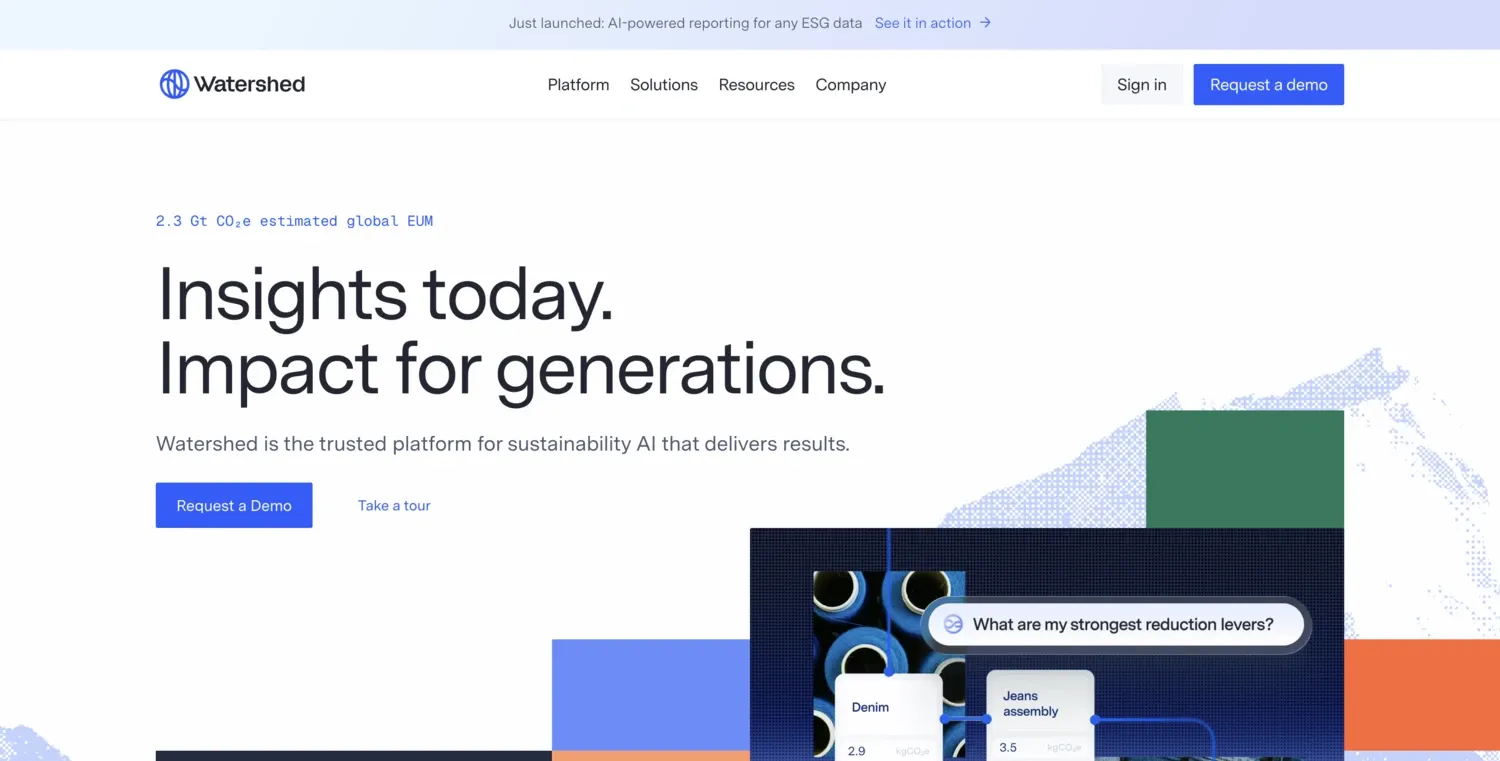
Watershed is a platform dedicated to helping companies measure, report, and reduce their carbon footprints. It offers detailed insights and supports alignment with global climate goals, such as those set by the Paris Agreement.
Key features: Watershed facilitates easy emissions data collection, supports emissions-reduction planning and strategy development, and ensures data collection from multiple sources for comprehensive reporting.
Top clients: FedEx, Bain Capital, Spotify, Airbnb.
6. SustainIQ
SustainIQ is sustainability management software that allows businesses to centralize and manage their environmental, social and corporate governance data. It supports both automated and manual data capture.
Key features: SustainIQ offers real-time reporting, automation, bulk data uploads and comprehensive analysis across multiple ESG factors. It is designed to streamline the management and reporting of ESG data.
Top clients: ODGroup, Fibrus, Aberdeenshire Council.
7. Benchmark Gensuite
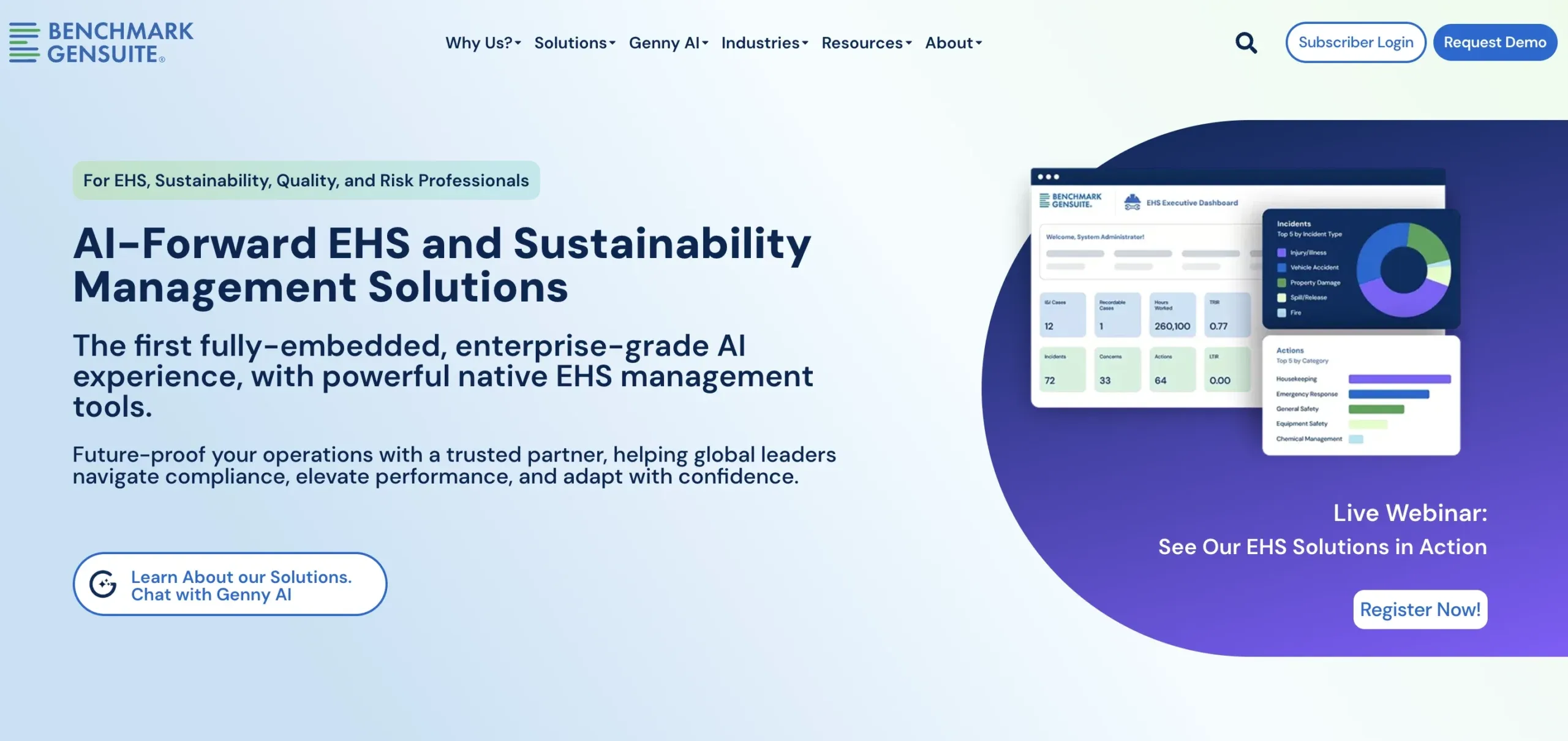
Benchmark Gensuite combines ESG reporting with environmental, health and safety (EHS) and operational risk management. It features advanced technology and AI solutions for real-time data analysis.
Key features: Gensuite provides comprehensive ESG reporting integrated with EHS and risk management, advanced AI solutions for real-time analysis, and customizable dashboards for improved visibility.
Top clients: Organizations looking for an integrated platform for managing EHS, quality, risk, compliance, and ESG data.
8. Microsoft Sustainability Cloud
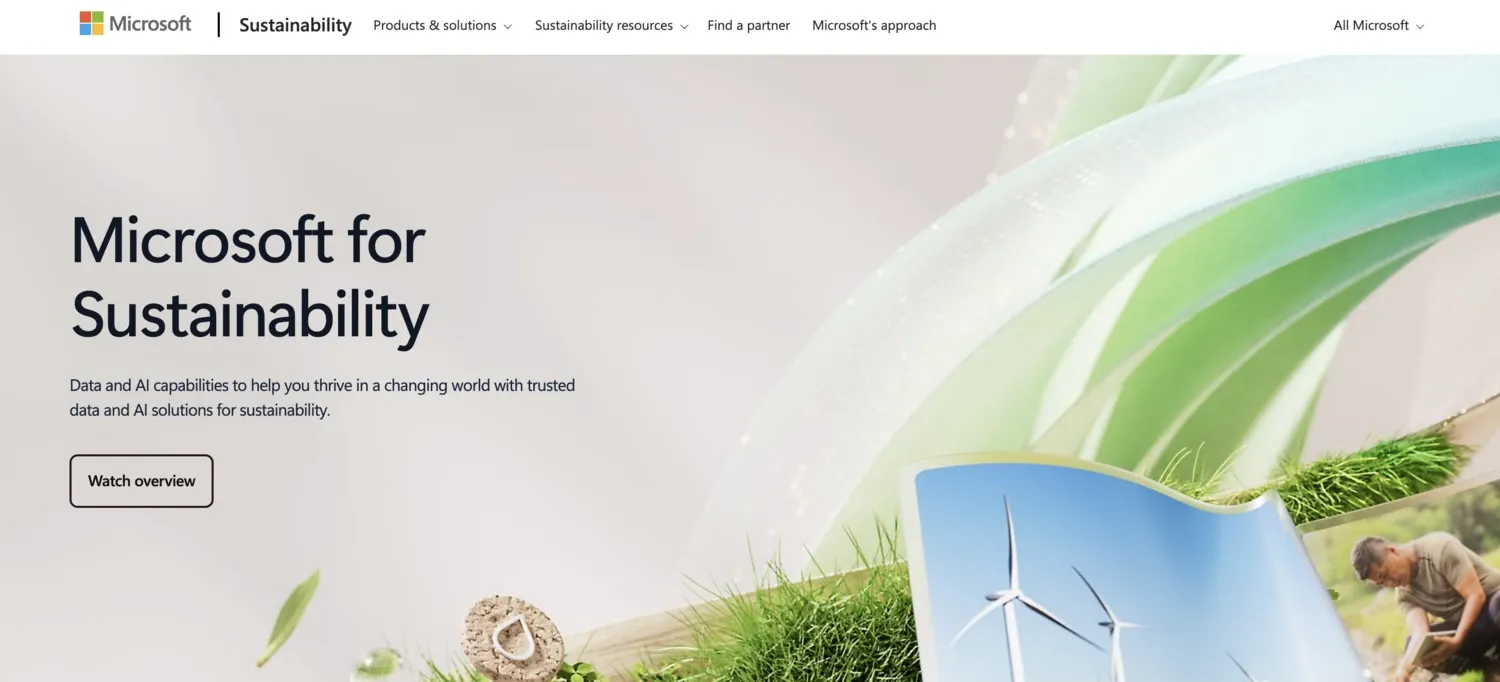
Microsoft Sustainability Cloud offers a suite of ESG capabilities designed to accelerate sustainability progress. It integrates carbon accounting data across value chains and supports data governance.
Key features: The platform provides data intelligence, improves audit trails and workflow management, and enables accurate, timely sustainability reporting.
Top clients: Group Bimbo, Ingredient, FLSmidth.
9. IBM Environmental Intelligence Suite
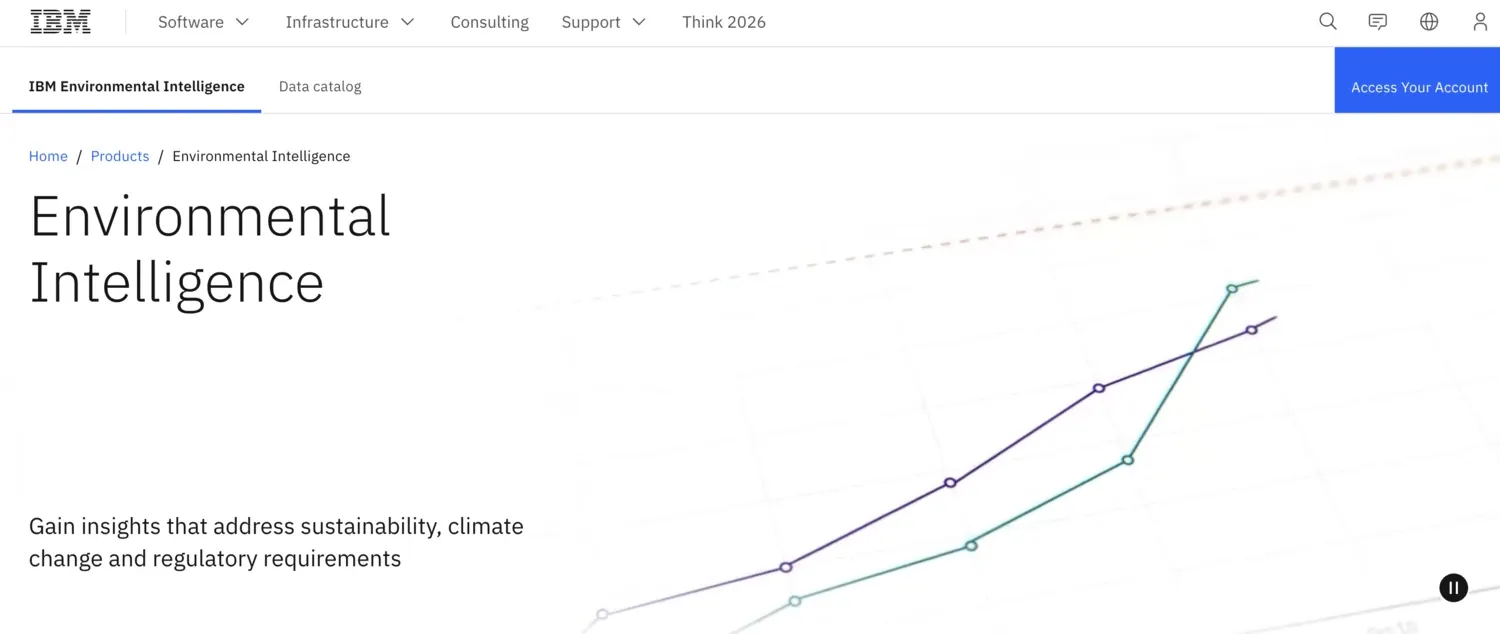
IBM’s Environmental Intelligence Suite combines climate and environmental data with advanced analytics. It provides in-depth insights into environmental risks and carbon emissions.
Key features: The suite includes comprehensive carbon accounting, projections of future carbon emissions, and biomass estimation to assess deforestation impacts.
Top clients: Sheltair Aviation, Agrilife, Plan 21, Shell.
10. Normative
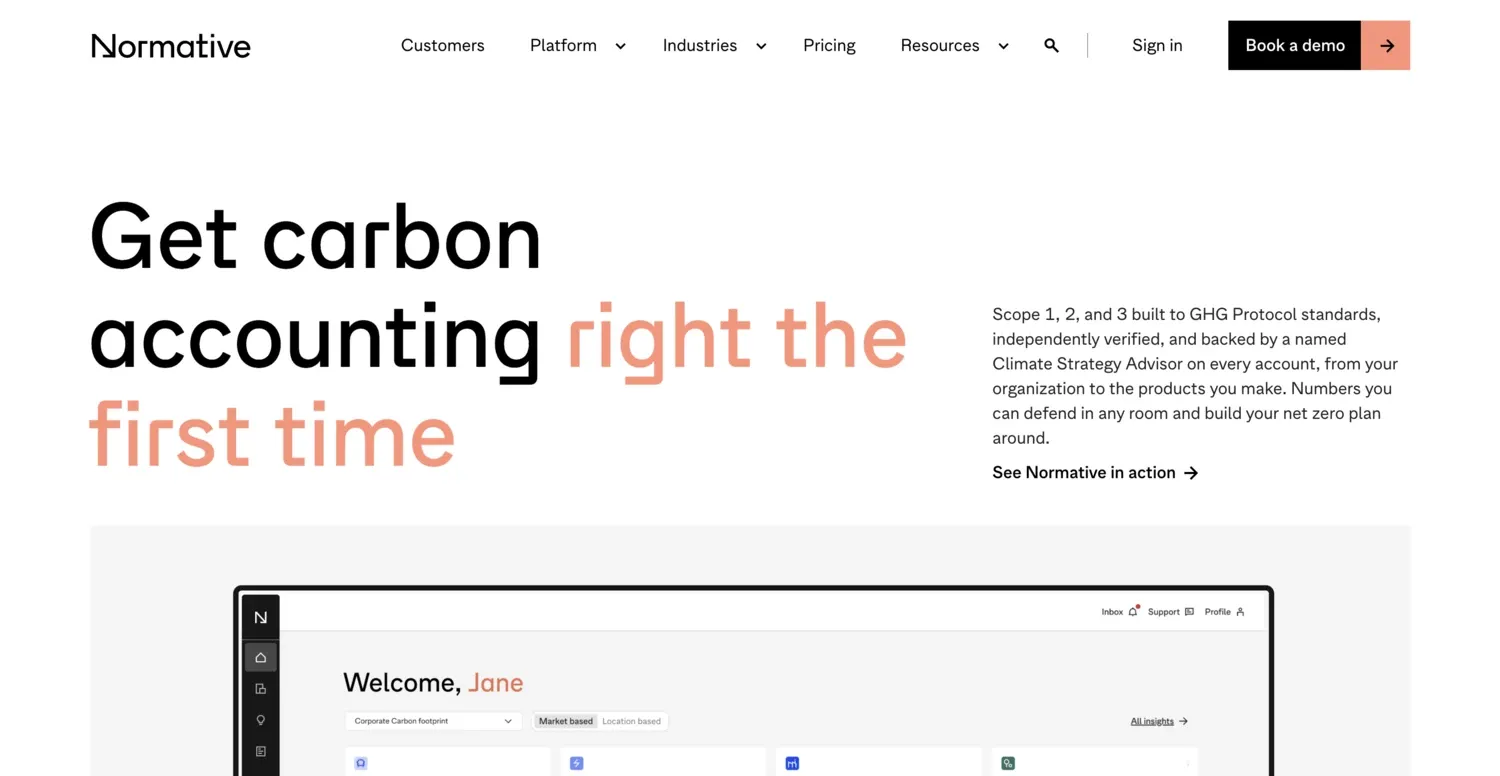
Normative offers a comprehensive carbon accounting platform designed to help companies achieve net-zero emissions. It supports capturing, modeling, and reporting carbon data.
Key features: Normative provides enhanced visibility into Scope 3 emissions, support for small suppliers with a free carbon calculator, and collaboration tools for emission reduction planning.
Top clients: Hertz, Nordea, Topps Tiles, Flying Tiger Copenhagen, Hitachi.
Not all ESG software is built the same. Platforms vary significantly in how they handle data, reporting, and business integration.
Understanding these differences is key to selecting the right solution for your organization. Most ESG software platforms can be grouped across a few core dimensions.
Some ESG platforms are designed for large, complex organizations with multiple entities, geographies, and reporting requirements. These typically offer deeper customization, stronger governance controls, and support for large-scale data management.
Others are built for mid-market companies, with simpler setups, faster deployment, and more standardized workflows. These can be easier to adopt but may have limitations as reporting requirements grow.
Carbon-focused platforms specialize in emissions measurement and decarbonization, with strong capabilities for Scope 1, 2, and 3 tracking.
Full ESG platforms go broader, covering environmental, social, and governance data in a single system. These are better suited for organizations managing multiple frameworks and stakeholder requirements beyond carbon reporting.
Some platforms are designed primarily for regulatory reporting. They focus on structured workflows, audit trails, and producing disclosures aligned with frameworks such as CSRD or IFRS standards.
Others emphasize analytics and performance tracking, helping organizations use ESG data to identify risks, monitor progress, and support decision-making across the business.
Financial integration vs sustainability-led systems
Certain platforms are closely aligned with financial reporting, making them easier to integrate into existing finance and compliance processes.
Others are built from a sustainability perspective, focusing more on operational data, supply chain inputs, and environmental impact tracking. These can offer deeper insight into ESG performance but may require more integration with financial systems.
What to look for when selecting ESG software
Once you understand how platforms differ, the next step is evaluating whether a solution fits your organization’s needs.
Key areas to assess include:
- Scope and data coverage – The platform should support your full ESG footprint, including Scope 1, 2, and 3 emissions, as well as relevant social and governance metrics.
- Framework alignment – Look for support across multiple frameworks such as CSRD, ISSB, GRI, and TCFD, with the ability to reuse data across disclosures.
- Data integration – Strong integration with finance, procurement, HR, and operational systems is critical for reducing manual work and improving accuracy.
- Workflows and auditability – Ensure the platform supports structured data collection, approvals, and validation, with clear audit trails for assurance.
- Scalability and usability – The system should scale with your reporting requirements while remaining usable for teams across the business.
New to ESG software? Read our complete guide on how ESG software simplifies sustainability reporting and compliance.
Why enterprises choose Sweep
Most ESG programs fail because the data can’t be used with confidence.
Different teams work in different systems. Assumptions change. Inputs arrive late. By the time reporting deadlines hit, teams are reconciling numbers instead of trusting them. That slows everything down and makes it harder to stand behind disclosures.
Enterprises that move forward treat ESG data the same way they treat financial data. It needs ownership, consistency, and a clear process.
Sweep enables organizations to manage ESG data with greater control, so reporting is not a one-off exercise but part of how the business operates. Teams can work with consistent inputs, track changes over time, and rely on outputs without rebuilding them each cycle.
With Sweep, enterprises can:
- Establish consistent ESG data processes across teams
- Improve confidence in reporting with traceable, validated inputs
- Manage Scope 1, 2, and 3 emissions with greater oversight
- Align disclosures with frameworks such as CSRD, ISSB, GRI, and TCFD
- Use sustainability data as a reliable input for business decisions
Book a demo to see how Sweep can turn your ESG data into a decision-ready system.