Watershed is a climate platform designed to help organizations measure emissions, manage climate disclosures, and plan decarbonization strategies across complex operational environments.
The platform is used by organizations focused on climate intelligence, emissions reduction planning, Scope 3 management, and broader sustainability strategy. The question is, is it right for your organization?
This review looks at how Watershed approaches these challenges, the core capabilities it offers for climate and sustainability management, and where it may or may not fit depending on how sustainability is managed within the organization.
What is Watershed and who is it best suited for?
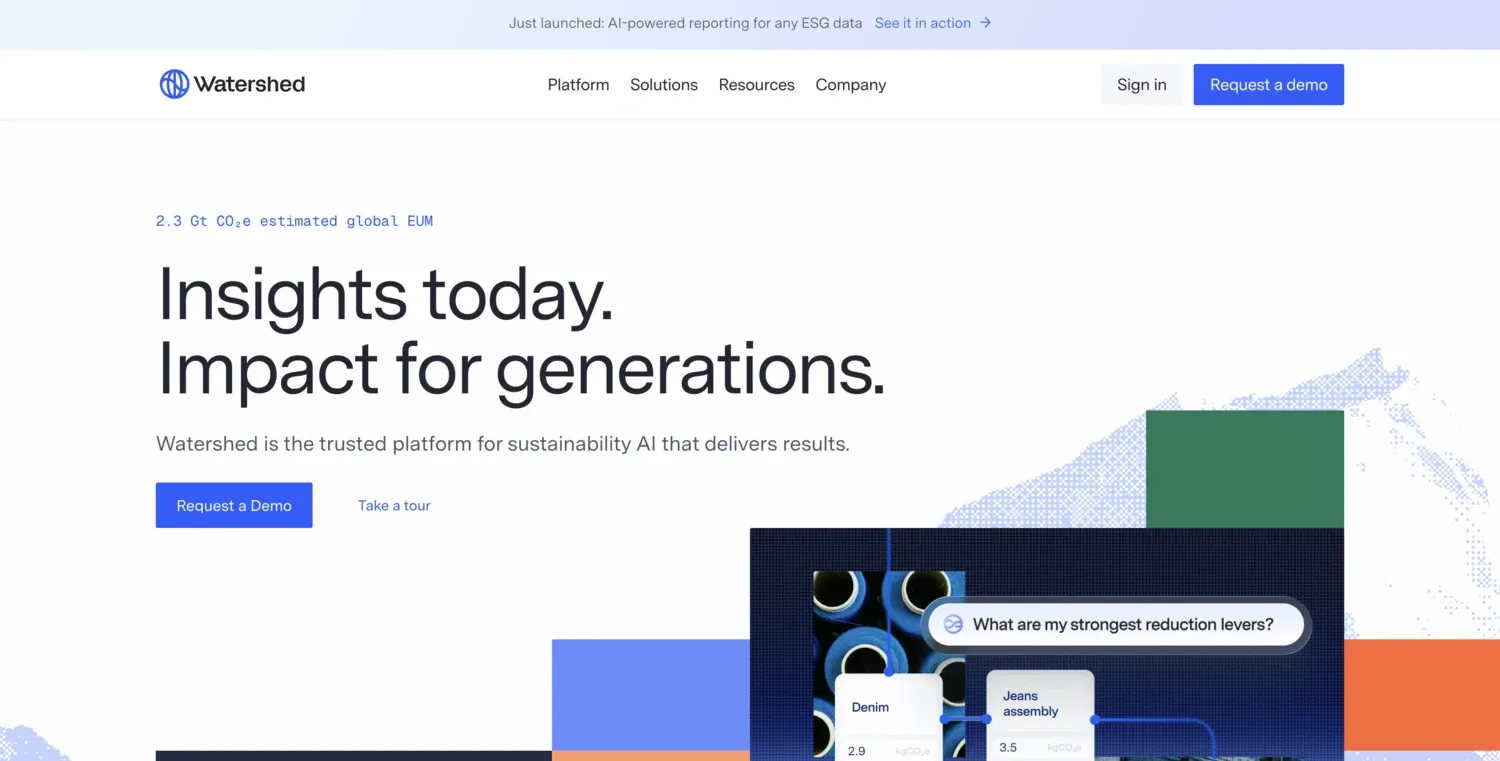
Watershed is a climate platform designed to help organizations measure emissions, report on carbon data, and plan decarbonization strategies across complex operational environments.
Alongside carbon accounting and sustainability reporting, Watershed places a strong emphasis on helping organizations understand the drivers of emissions and identify opportunities to reduce them across suppliers, products, infrastructure, and operations.
The platform supports sustainability teams by:
- Using data analysis and AI-driven insights to identify emissions hotspots and prioritize reduction efforts
- Identifying emissions hotspots across suppliers, products, and operations
- Providing benchmarking insights to compare performance against peers
- Enabling scenario modeling to evaluate decarbonization strategies and reduction pathways
- Structuring carbon data for regulatory disclosures and investor reporting
These capabilities allow organizations to link carbon data directly to operational decision-making and climate action.
Watershed’s core features and capabilities
Carbon accounting and Scope 3 management
Watershed supports emissions measurement across Scope 1, 2, and 3 categories, helping organizations build a more detailed view of emissions across suppliers, products, infrastructure, and operational activities.
The platform is particularly focused on helping organizations understand complex Scope 3 emissions drivers, which are frequently the largest and most difficult part of enterprise carbon footprints.
Sustainability AI and climate intelligence
AI and data analysis are central to Watershed’s positioning. The platform uses climate data, benchmarking insights, and AI-assisted analysis to help organizations identify emissions hotspots, understand reduction opportunities, and prioritize climate initiatives.
This moves the platform beyond reporting alone and into ongoing climate intelligence and operational sustainability planning.
Decarbonization planning and climate strategy
Watershed includes tools for scenario modeling, reduction forecasting, and decarbonization planning. Organizations can use the platform to evaluate reduction pathways, track progress toward sustainability targets, and model the impact of operational or supplier-related changes over time.
This is particularly useful for organizations managing long-term climate targets or science-based reduction commitments.
Supplier engagement and climate ecosystem
Watershed places significant emphasis on supplier engagement and broader climate collaboration. The platform supports supplier emissions visibility and provides access to a wider ecosystem of sustainability advisors, consultants, carbon removal providers, and renewable energy initiatives.
This helps organizations connect emissions reporting with broader climate action and supplier decarbonization efforts.
Notable case study
Pinterest partnered with Watershed to build and scale its sustainability program, using the platform to measure emissions, support climate target setting, and improve operational decision-making across the business.
As Pinterest expanded its sustainability efforts, the company needed a more reliable way to measure emissions, understand Scope 3 impacts, and communicate sustainability progress internally and externally. A major focus was improving visibility into emissions generated through its cloud infrastructure and operational systems.
Watershed was implemented to help Pinterest:
- Measure emissions across operations and establish a historical emissions baseline
- Support science-based target setting and emissions forecasting
- Identify Scope 3 emissions reduction opportunities across cloud infrastructure and supply chain activities
- Improve sustainability reporting and stakeholder communication using centralized climate data
- Track progress toward renewable energy and emissions reduction goals
Using Watershed, Pinterest achieved 100% renewable electricity across global offices and reported a 39% reduction in absolute emissions from its 2019 baseline. The company also used climate data and engineering collaboration to reduce carbon emissions per AWS query by 62% through infrastructure optimization initiatives.
Potential limitations and considerations
Watershed is designed primarily around climate management, carbon intelligence, and decarbonization strategy. Organizations looking for broader ESG management capabilities outside climate programs may still require additional systems or workflows alongside the platform.
Because the platform places significant emphasis on emissions analysis, reduction planning, and operational climate initiatives, organizations may also need sufficient internal sustainability maturity, stakeholder alignment, and data ownership processes to fully operationalize the platform across teams.
Enterprise implementations involving large supplier networks, operational datasets, and complex Scope 3 categories can also require ongoing coordination across sustainability, operations, procurement, and engineering teams.
If you’re looking to compare Watershed with other climate and sustainability platforms, you can explore our guide to Watershed alternatives.
How Sweep compares to Watershed
Watershed and Sweep both support sustainability management across complex operational environments, but they approach the problem from different angles.
| Area | Sweep | Watershed |
| Core focus | Sustainability management, workflows, and sustainability intelligence | Climate intelligence and decarbonization strategy |
| Primary users | Sustainability, operations, procurement, finance, and supply chain teams | Sustainability and climate strategy teams |
| Reporting approach | Workflow-driven sustainability data management | Climate data analysis and carbon reporting |
| Scope 3 management | Supplier collaboration and operational sustainability workflows | Emissions hotspot analysis and reduction planning |
| Sustainability workflows | Cross-functional sustainability coordination and operational management | Climate strategy and decarbonization initiatives |
| AI positioning | Sustainability workflow automation and operational insights | Climate intelligence and emissions analysis |
| Best suited for | Organizations connecting sustainability data with operations and strategy | Organizations prioritizing climate action and emissions reduction planning |
In a nutshell:
Watershed is strongest in organizations where climate intelligence, emissions reduction, and decarbonization strategy are central sustainability priorities.
Sweep may be a better fit for organizations looking to connect sustainability reporting, operational workflows, supplier engagement, and sustainability intelligence within a broader sustainability management system.
Choosing the right approach to climate intelligence
Watershed is a great solution for organizations where climate intelligence, emissions reduction planning, and decarbonization strategy are central sustainability priorities. Its strengths are centered on helping organizations understand emissions drivers, identify opportunities for reduction, and connect climate data to operational decision-making.
Yet, if organizations are looking to manage broader sustainability workflows across reporting, supplier collaboration, operational coordination, and cross-functional sustainability management, a more all-in-one sustainability system may be required.
Book a demo to see how Sweep helps organizations connect sustainability reporting, operational workflows, and sustainability intelligence within a single platform.