Background
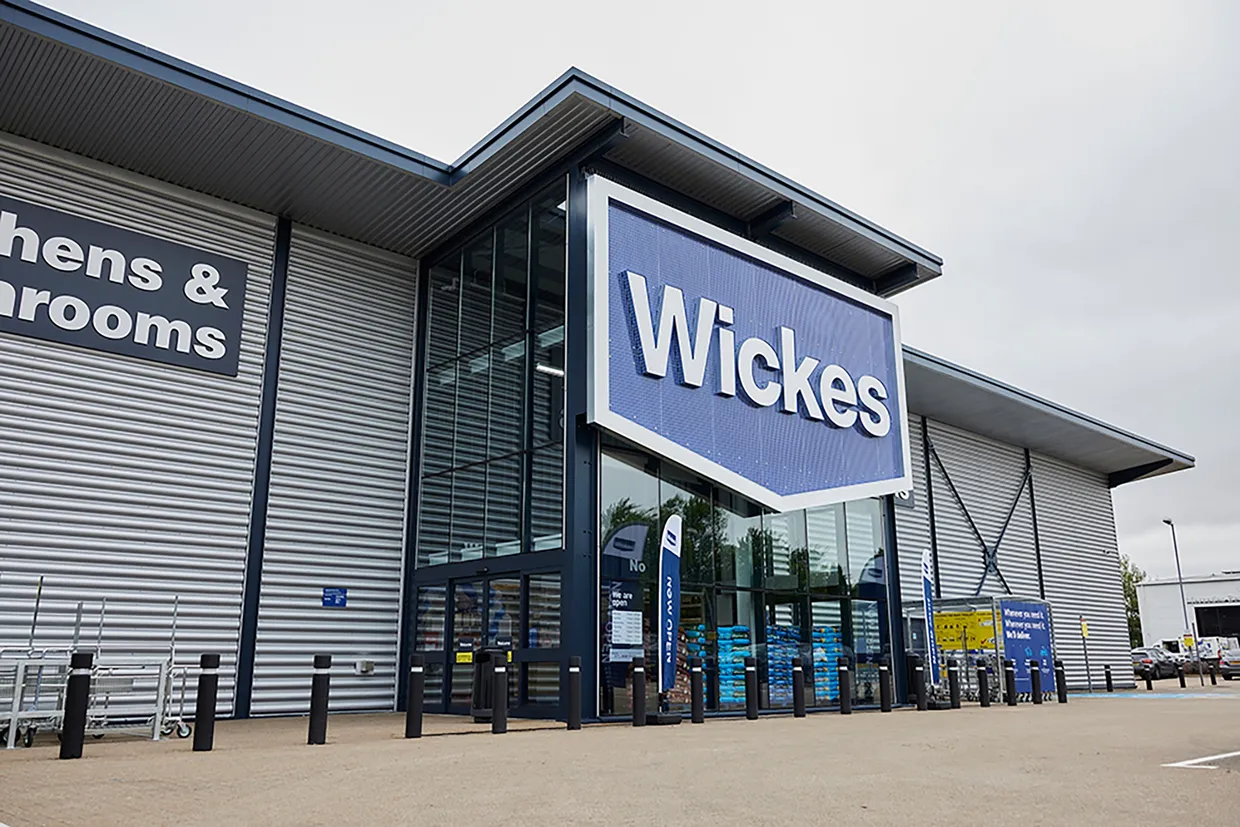
Wickes has carved out a distinctive position in the competitive UK home improvement market as one of the country’s largest retailers that takes its environmental responsibilities seriously. Operating around 230 stores nationwide and serving customers through multiple digital channels, the FTSE 250-listed retailer has embedded sustainability into its core business strategy through its “Responsible Business Strategy – Built to Last.”
The retailer’s commitment to sustainability balances corporate responsibility with business resilience. With ambitious near-term science-based targets aligned with the UK’s 2050 net zero goal, Wickes recognizes that climate action is essential for long-term success. The company has earned recognition for its transparency efforts, securing inclusion in the FTSE4Good index, achieving an MSCI ‘AAA’ rating, and earning a CDP Climate Change Leadership score.
As Chief Commercial Officer Mark Cooke put it, “At Wickes we recognise the substantial risk that climate change poses to humanity and the environment.” This understanding has made sustainability a strategic focus rather than a purely compliance-focussed exercise.
Challenge
With over 95% of the retailer’s carbon footprint related to the products it sells compared to its own operations, Wickes faced a classic Scope 3 emissions challenge.
In order to identify emission hotspots in its supply chain with a high degree of accuracy, and subsequently prioritize decarbonization efforts, the company’s Sustainability and Commercial teams need access to granular product-level emissions data.
The retailer also needs detailed supplier data to accurately measure its progress against science-based targets. However, with thousands of products from numerous suppliers, manual data collection and management of sustainability data is complex, time-consuming and open to inconsistencies.
Most critically, the team knows that robust sustainability data is essential to allowing them to demonstrate meaningful progress to investors, customers, and other stakeholders who increasingly expect transparent climate action.
Solution
Wickes’ partnership with Sweep enables the retailer to enhance its work to demonstrate progress by measuring its climate performance, thereby building increased trust with stakeholders.
Sweep’s platform enables Wickes to engage directly with suppliers to obtain detailed, product-level emissions data: a game-changer for a retailer where supply chain emissions dominate the carbon footprint. Rather than relying on industry averages, Wickes can now capture actual emissions data, creating an increasingly accurate and actionable picture of its environmental impact.
The platform’s ability to integrate with other tools creates a streamlined reporting experience for suppliers, reducing administrative burden while ensuring consistent, high-quality data collection. This strengthens supplier relationships and improves data reliability.
With increasingly robust, granular emissions data, Wickes is able to demonstrate concrete progress against its science-based targets, building stakeholder trust and supporting strong ESG ratings.
As Wickes’ Chief Commercial Officer Mark Cooke, says:
“We are committed to playing our part to achieve the UK’s 2050 net zero target. Given that over 95% of Wickes’ carbon footprint relates to the products we offer, strategic collaboration with our supplier partners is essential for us to make meaningful progress towards decarbonizing our business. Achieving this requires robust product data and the ability to clearly identify key carbon emissions hotspots. The Sweep platform will be instrumental in enabling this data-driven approach.”
By identifying emissions hotspots with precision, Wickes can make data-driven decisions about decarbonization investments, ensuring maximum impact from every sustainability penny spent.
The platform helps Wickes to better understand its carbon footprint and associated risks, better positioning the retailer to meet stakeholder expectations and support long-term business success.